
Hierarchy of Laws
From the Universal down to the Citizen — see where authority truly originates, where rights live, and where mere privileges begin.
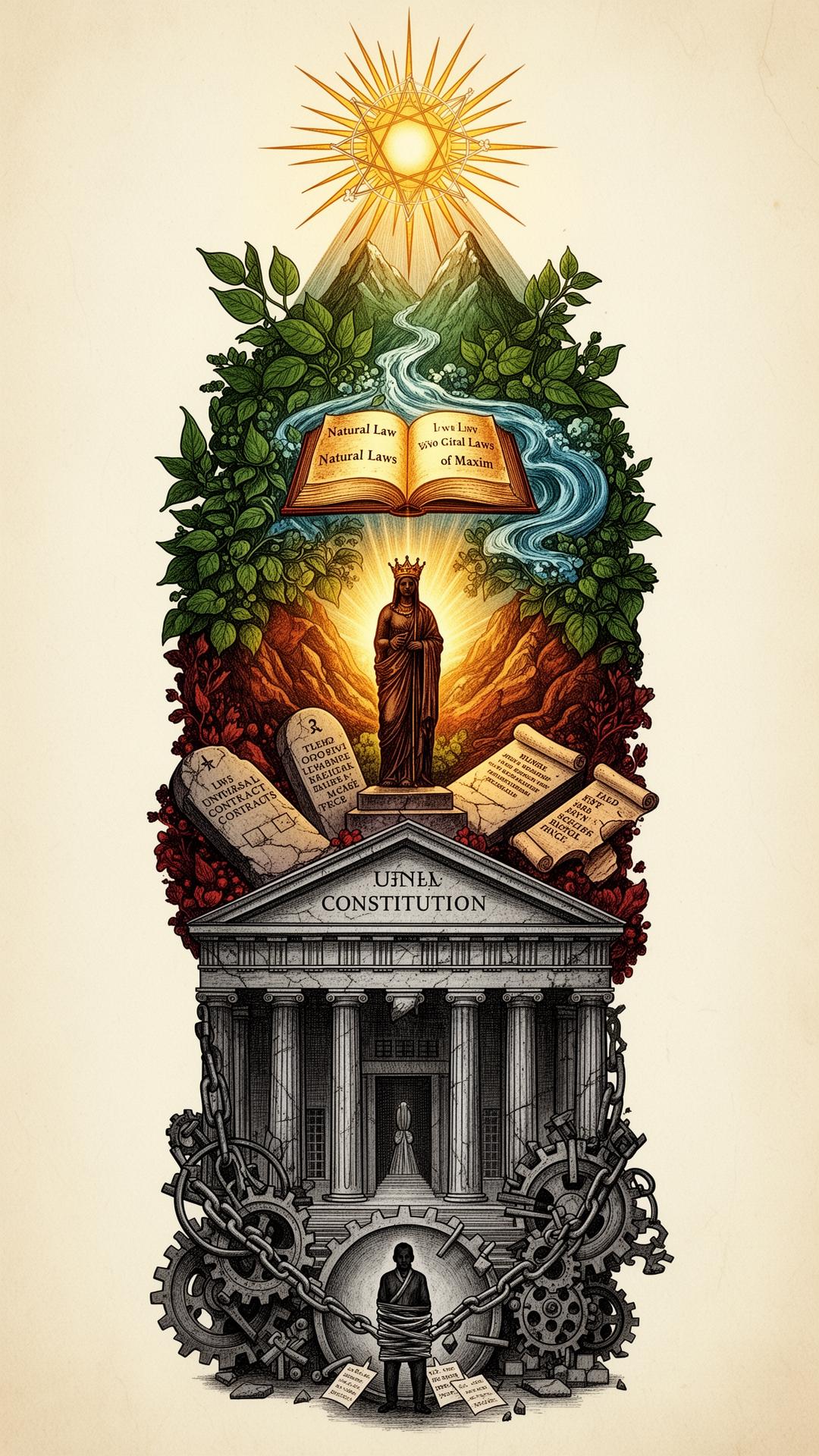
Source authority — energy, nature and Maxim. Cannot be revoked.
The living being acting in lawful capacity — contracts and treaties.
Created corporate constructs — codes, statutes and ordinances, not law.
Universal Laws
The law of energy
- Deal with energies.
- Main principle: whatever energy you put out must come back to you.
Natural Laws
The law of all that is
- Deal with the natural ways of all objects and beings which have manifested in the 3rd dimension.
Laws of Maxim
Also known as “God’s Laws”
- Come straight out of the Bible and are the highest laws of the land.
- They are RIGHTS given by God to all beings and cannot be taken away by anyone.
- Eternal principles of duty and cosmic order that weave a sacred balance — where universal duties and inherent rights coexist. To fulfil one's duty is to protect the God-given rights of all living beings, ensuring a harmony that no human authority can diminish.
Living Being
Human Being — master of self
- A being that is master of self.
- Operates under God’s law.
- Has the ability to create laws and constitutions for itself and corporations that it creates.
Contract Law
Offer + Acceptance = Contract
- A set of laws which sovereigns world-wide adhere to in commerce.
- Offer + Acceptance = Contract.
Treaties
Living Being to living
- Laws made between two sovereigns that deal with a particular tract of land.
Constitution
Governs a created corporation
- Laws created by a living that govern a corporation created by a living.
Corporation
A dead fictional entity
- Operates under the laws of the constitution developed by the living.
- Does NOT have the ability to create laws — can only create Codes, Statutes, and Ordinances.
Federal Codes
Codes within corporations
- Codes which govern corporations within corporations. Include UCCs.
Police Corporations & Agents
Private agencies of the corporation
- Private agencies of the corporation they belong to. Equivalent to a private citizen.
Citizen
Has privileges, not rights
- A slave of the corporation to which it pledges. Does not have rights.
- Only has privileges which are given to it by the corporation to which it pledges.
Above the line — rights. Below the line — privileges.
Everything from Universal Law through Treaties is law. Everything from Constitution downward is the world of legal fiction — corporate codes, statutes and ordinances. The Citizen at the bottom holds only privileges granted by the corporation it pledges to.
The Assignment of Consent moves you back across that line — out of the presumed Citizen status, and back to the Living Being tier under Maxim.